
A Historic El Niño Is Coming. Here’s How We’ve Prepared.
On September 21, Governor Newsom declared a statewide state of emergency ahead of what forecasters say could be the strongest El Niño on record.
For California, that means round after round of heavy rain, deep mountain snow, and rivers running high for months. For the Sacramento region, a winter like this is the real test of our flood protection.
Since being elected to Congress, I have made protecting our communities from catastrophic flooding one of my top priorities. Working alongside our local flood control agencies, the Army Corps of Engineers and the State, we have rebuilt or reinforced nearly every piece of the system.
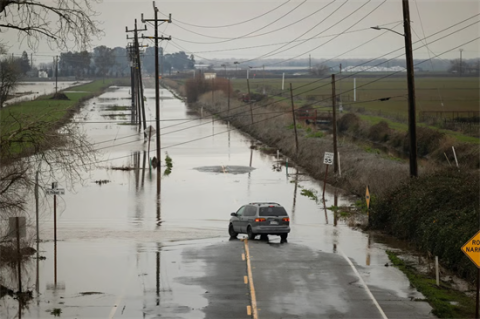
What’s at Stake if the Levees Fail
Sitting at the confluence of two major rivers, Sacramento is the most at-risk city in the country for river flooding. More than half a million people live in our floodplain, along with more than $70 billion in homes, businesses, and property.
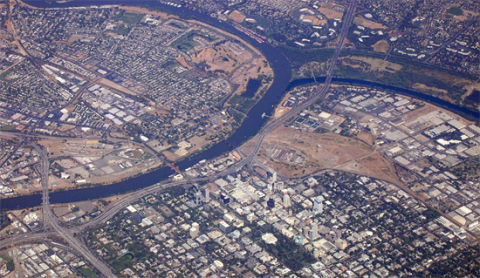
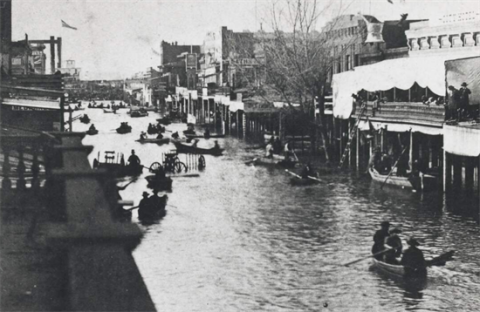
We know the danger because we have lived it. In 1862, the American River levee broke and flooded the city so badly that Governor Leland Stanford rode a rowboat to his own inauguration. In 1986, ten inches of rain fell in eleven days, and Folsom Dam had to release more water than the levees downstream were designed to carry. In 1997, levee failures flooded Olivehurst, Arboga, and Wilton. Sacramento was spared only because the worst of that storm hit 40 miles to the north.
Then Hurricane Katrina showed the nation what happens when a city’s levees fail. Engineers took a hard second look at ours and found that many no longer met modern safety standards. A multi-agency analysis from that time modeled levee breaks in Natomas, the Pocket, and near Sacramento State.
It found that levee failure could lead to:
- 102 square miles underwater and 63,800 homes and buildings flooded
- 118,000 people facing water ten feet deep or more
- Sacramento International Airport under 15 feet of water
- Four major hospitals and 65 schools flooded
- As many as 500 lives lost
Every project that follows was built to keep that from happening.
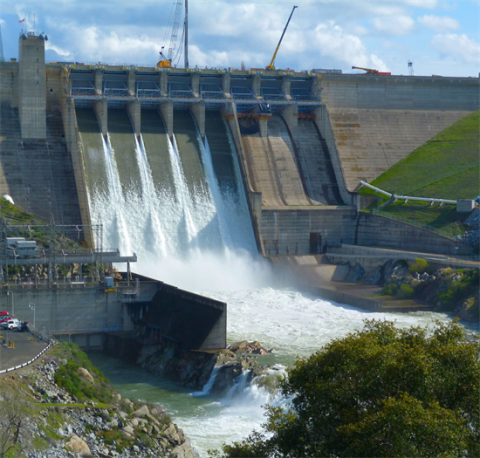
Folsom Dam: Our First Line of Defense
When it opened in the 1950s, Folsom Dam was expected to hold back a 500-year storm on the American River. By 1986, after three decades of record floods, engineers estimated it could safely handle only about a 60-year storm.
In 2005, the plan to fix Folsom Dam hit a wall. Construction bids came in 2.5 times over budget, and the Army Corps proposed an eight-year study to decide what to do next. At the same time, the Bureau of Reclamation was proceeding with design of an ungated spillway to address dam safety issues at Folsom Dam.
Instead of waiting, I brought the Army Corps and the Bureau of Reclamation together to build one joint project. Congress authorized it in 2007, and construction began the next year. The new $1.1 billion auxiliary spillway was completed in 2017. It was finished five to seven years sooner, and more than $1 billion cheaper than if the two agencies had each built their own project.
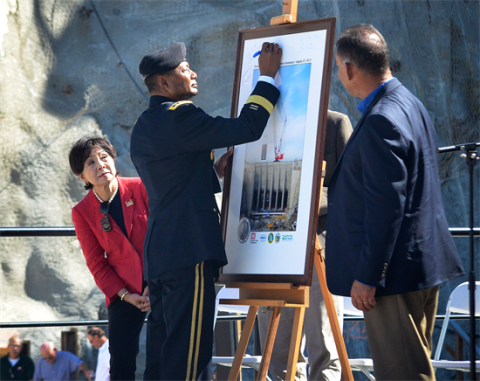
The new spillway’s gates sit lower than the old ones, so operators can drain the reservoir faster and make room before a big storm arrives. Folsom now also uses weather forecasts to start releasing water early, an approach that has become a model for dams across the country.
Federal funding our region won in 2018 is also raising Folsom Dam and its dikes by three and a half feet, giving the reservoir more room to hold back floodwater. When costs grew in 2022, I worked with the Army Corps to add $110.9 million, bringing total funding for the dam raise to about $400 million. The project is fully funded and under construction.
Rebuilding 106 Miles of Levees
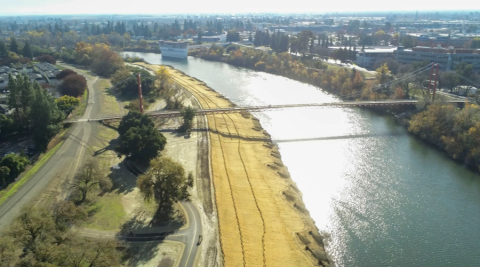
The biggest weakness engineers found after Katrina was water seeping underneath the levees and weakening them from below. In 2007, the Army Corps found that the 42 miles of levees around the Natomas Basin provided well under 100-year protection. After years of work, Congress authorized $1.15 billion in 2014 to rebuild them to the new urban standard.
In 2016, Congress approved just two new flood-control construction starts nationwide, out of a backlog of more than $90 billion in projects. We landed one of them for Natomas.
Also in 2016, our region won a $1.6 billion authorization, the largest Sacramento had ever received, to rebuild the remaining levees protecting the city. It covers erosion protection along the American and Sacramento Rivers, underground walls to stop seepage along the Sacramento River and north area creeks, and a wider Sacramento Weir and Bypass.
In 2018, Congress set aside roughly $4.5 billion for flood projects in states outside the hurricane zones. I secured $1.8 billion of it for our region, about 40 percent of that money nationwide. It is paying for levee and erosion work, the wider Sacramento Weir and Bypass, and the Folsom Dam raise.
Levees along both sides of the American River and the creeks in South Sacramento were rebuilt in 2016, and work continues across the rest of the system.
Giving Floodwater Somewhere to Go
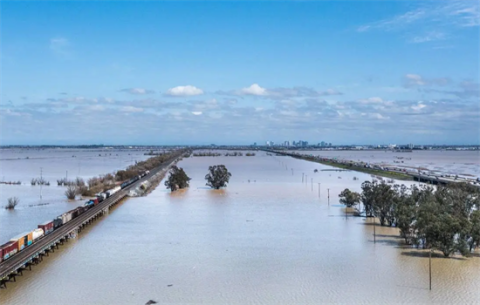
Strong levees are only part of the answer. When rivers run high, the system also needs a safe place to send the extra water. That place is the Yolo Bypass, a wide floodway west of the city that carries about 80 percent of the floodwater from the Sacramento, American, and Feather Rivers during a major storm.
Much of that water gets there through the Sacramento Weir, a century-old spillway just upstream of where the American and Sacramento Rivers meet. The 2018 federal funding is widening the weir by 1,500 feet and building a new two-mile levee along the Sacramento Bypass. That lets far more water move away from Sacramento and West Sacramento before it can push against our levees.
The Yolo Bypass itself is next. In 2020, I wrote a new, comprehensive study of the Yolo Bypass into that year’s national water resources law. Funding to start the study followed in 2023, with full funding to finish it in 2025. It will identify the improvements the bypass needs to protect our region for decades to come.
West Sacramento: Protecting a City Surrounded by Water
West Sacramento sits in a bowl. The Sacramento River runs along one side, the Yolo Bypass along the other, and levees wrap around the entire city. Every one of its ~55,000 residents depends on those levees holding.
Congress authorized the West Sacramento Project in 2016 to rebuild the city’s levees to modern standards, but the project was passed over twice for federal construction funding. In 2022, I secured its “New Start” construction designation, one of only a few awarded nationwide each year, along with $17.9 million to break ground.
That September, the Army Corps, the State, and the West Sacramento Area Flood Control Agency signed a $1.1 billion agreement to finish levee work along the Sacramento River and the Yolo Bypass.
The new 5.6-mile Southport levee, an $80 million project with the Army Corps covering up to 65 percent of the cost, now protects the southern part of the city and created 120 acres of new wildlife habitat. The project now serves as a nationwide model for how to engineer with nature. We also won $1.8 million to pave a new bike trail along its top. In April of this year, crews completed new levee improvements and a pump station along the Yolo Bypass, built with federal funding, fixing seepage problems that had troubled the area for years.
Flood Protection Keeps Our Economy Building
Weak levees don’t just put homes at risk. They stop economic growth.
When FEMA put Natomas back in the floodplain in 2008, new construction came to a halt. Up to 5,000 homes that already had building permits were put on hold, and even a dozen families with fire-damaged homes couldn’t rebuild. The freeze lasted nearly seven years. It ended only after the 2014 federal authorization for the Natomas levees allowed FEMA to lift the ban in 2015. Since then, Natomas has added thousands of homes, six hotels, office parks, a community college campus, and a sodium-ion battery manufacturing facility.
What’s less known is how close the rest of the region came to the same fate. In 2013, the Corps of Engineers withdrew accreditation of all the levees in Sacramento outside the Natomas Basin because they did not meet new urban levee standards. Also since 2016, state law has barred Central Valley cities and counties from approving new homes and development in flood-prone areas unless their levees meet a 200-year standard, or the work to get there is funded and under construction.
Because the federal authorizations and funding were in place, FEMA decided not to remap the rest of Sacramento back into the 100-year floodplain and Sacramento has been able to meet that State test and keep building. The City’s 2016 approval of the Railyards, one of the largest infill projects in the country, relied on exactly that finding.
Get Ready Now
Our levees and dams are stronger than they have ever been, but no system can remove every risk. Here is what every household can do before the storms arrive:
- Sign up for emergency alerts from your county at listoscalifornia.org/alerts.
- Know your flood risk. Look up your address on FEMA’s flood maps at msc.fema.gov.
- Make a plan. Know your evacuation route, and keep a kit ready with medications, important documents, and supplies for your pets.
- Never drive through floodwater. It is often deeper and faster than it looks. Turn around and find another route.
You can find more on the Storm Resources and Flood Insurance pages of my website. If you need help with a federal agency, call my Sacramento office at (916) 498-5600.
Construction continues at Folsom Dam, along the Sacramento and American Rivers, and in West Sacramento. I will keep pushing until every piece of this system is finished.